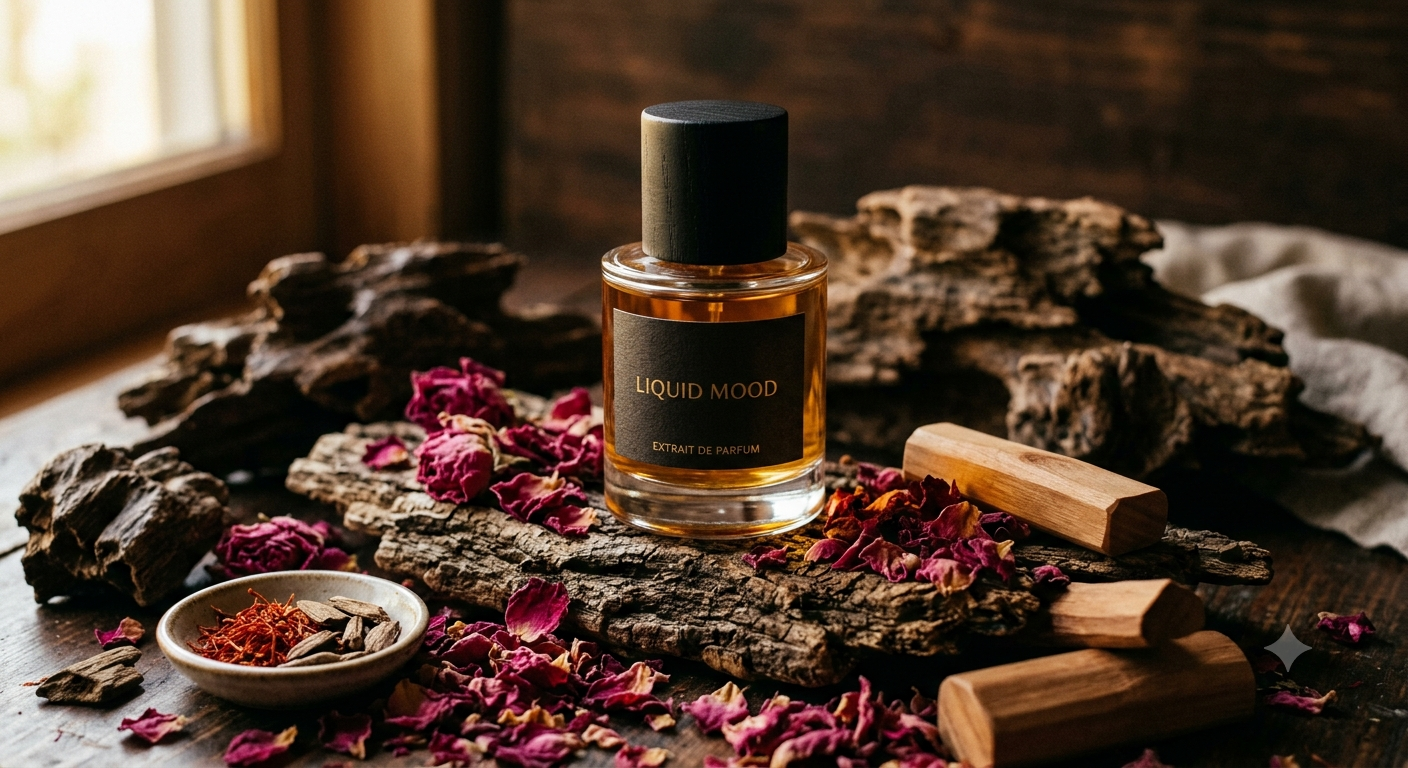
For decades, the global luxury fragrance industry maintained that true olfactory sophistication belonged strictly to Paris or Grasse. Yet behind the multi-million-dollar marketing budgets of traditional Western perfume houses lies an indisputable truth: the world's most cherished fragrance ingredients have always drawn their legacy from India.
From the ancient copper hydro-distillation stills (Deg-Bhapka) of Kannauj to the sacred sandalwood groves of the South, India’s scent history stretches across millennia. Today, a major shift is occurring among perfume lovers. Discerning fragrance collectors are moving away from mass-produced, diluted designer bottles in favor of artisanal, small-batch Indian niche perfumes.
Here is an exploration of the art and science behind high-concentration niche perfumery, along with practical guidance on choosing a signature scent engineered for long-lasting sillage.
1. Raw Ingredients Over Synthetic Substitutes
Mass-market luxury brands rely heavily on synthetic aroma-chemicals to cut costs and mass-produce millions of identical units. In contrast, authentic niche perfumery centers on single-origin botanical extracts and wild-harvested resins:
- Kannauj Damask Rose (Rosa × damascena): Hand-picked at dawn when oil yields peak, offering a deep, honeyed floral complexity impossible to match with laboratory synthetics.
- Assam Oudh (Agarwood): Extracted from naturally aged resinous wood, delivering an opulent, woody warmth with remarkable depth.
- Mysore Sandalwood (Santalum album): Internationally revered for its rich, creamy texture and its role as an exceptional natural fixative that anchors a perfume to the skin.
When formulated in small batches, natural raw ingredients respond dynamically to your body chemistry, creating a truly personal signature scent.
2. Extrait Concentration: Decoding Longevity & Sillage
The most common complaint among fragrance enthusiasts is that modern luxury perfumes disappear after two or three hours. The reason comes down to fragrance oil concentration versus alcohol content.
While mainstream department store scents are diluted into Eau de Toilette (EDT) or standard Eau de Parfum (EDP), niche houses focus on higher oil ratios to produce lasting sillage—the subtle olfactory trail left behind as you move through a room.
Fragrance Concentration Breakdown:
- Eau de Toilette (EDT): 5% – 15% perfume oil | Lasts 2 to 4 hours
- Eau de Parfum (EDP): 15% – 20% perfume oil | Lasts 5 to 7 hours
- Extrait de Parfum / Niche: 20% – 35% perfume oil | Lasts 8 to 14+ hours
A higher perfume oil load provides a smoother evolution. Rather than evaporating quickly, the fragrance unfolds gradually from shimmering top notes to an enduring base.
3. Emotion-Led Perfumery: Wearable Stories
Beyond technical longevity, artisanal perfumery is guided by narrative and mood rather than commercial trends. Formulations are composed around emotional resonance:
- Petrichor & Earth: Capturing the sensory calm of the first rainfall meeting dry soil through wet vetiver and botanical distillates.
- Twilight Gardens: Deep Jasmine Sambac enveloped in warm cardamom, amber, and lingering incense smoke.
- Royal Warmth: Resinous agarwood balanced by the soft, golden spice of Kashmiri saffron.
3 Essential Steps to Maximize Sillage
To ensure your luxury niche perfume performs at its highest potential, apply these professional techniques:
- Prep skin with moisture: Scent molecules adhere far better to hydrated skin. Apply an unscented lotion or balm to your neck and inner wrists before spraying.
- Avoid friction: Never rub your wrists together after applying perfume. Friction generates heat that breaks down delicate top notes prematurely.
- Store correctly: UV light and temperature fluctuations break down aromatic oils. Keep your bottles in a cool, dark space away from bathroom humidity.